

Why Conference Organizers Are Booking Live Band Karaoke Now

Live band karaoke for conference and convention organizers works because the format converts passive attendees into active performers during the exact window, evening networking hours, when most general session energy has already drained out of the room. Instead of a DJ playing to a half-empty dance floor, a live band backs willing singers from the audience while everyone else becomes an engaged, cheering crowd.
Key Takeaways
Live band karaoke solves the specific problem of low evening engagement after full-day conference sessions, turning passive attendees into active participants rather than spectators.
According to Stellar Market Research, the global karaoke market was valued at USD 5.92 billion in 2026 and is projected to reach nearly USD 7.04 billion by 2032, reflecting sustained demand for interactive entertainment formats.
Event professionals recommend scheduling live band karaoke during cocktail hour or late-night sets, since placing it right after dinner speeches risks losing momentum.
A functional live band karaoke song catalog typically runs 50 to 75 tracks, wide enough for variety without overwhelming a diverse conference audience with too many choices.
Texas Live Band Karaoke is Austin's longest-running live band karaoke act, fully insured and production-ready for conferences and conventions of varying scale across Texas.
The format's built-in transition into a full dance band set after karaoke eliminates the "dead zone" that happens when entertainment ends before the venue closes.
If you've planned more than a couple of multi-day conferences, the pattern is familiar. General sessions run tight, breakout tracks fill the afternoon, and by the time evening networking rolls around, attendees are running on fumes and free drink tickets. Somebody hires a DJ. Somebody else suggests a "networking mixer" with a cash bar and ambient background music. Both are safe choices. Neither one gets remembered.
At Texas Live Band Karaoke, our team has worked enough conference evening programs across Austin, Houston, San Antonio, and Dallas to know exactly where those safe choices fall apart. The room stays polite. Nobody dances. Attendees check phones, cluster in small talk circles, and leave by 9:30. This outcome isn't an entertainment failure exactly, it's a format failure. Passive entertainment produces passive attendees.
This article breaks down what conference organizers consistently get wrong about evening programming, why live band karaoke fixes the specific mechanics of that failure, and how to evaluate whether the format fits your event in 2026. The sections below cover logistics, audience psychology, vendor evaluation, and the practical questions your risk management team and general session producer will ask before signing off.
What Do Conference Organizers Get Wrong About Evening Entertainment?
Conference organizers most commonly get evening entertainment wrong by treating the evening program as background ambiance rather than a programmed activity with its own arc. A DJ set or open bar assumes energy will generate itself once attendees are fed and free to mingle. That assumption rarely holds, especially with a professional audience that spent eight hours in sessions.
The mistake compounds when organizers assume "networking" is self-sustaining entertainment. Professional attendees at a convention or industry summit are often introverts by trade, or simply tired. Handing them a cocktail and open floor space doesn't create connection; the setup instead creates standing groups of people who already know each other. As a result, the newer attendees, the ones who most need the networking value, end up on the margins.
Additionally, many organizers underestimate how quickly a passive evening program signals to attendees that the conference is winding down. Once the energy dips below a certain threshold, no amount of lighting or catering upgrades brings the room back. Live band karaoke is designed to close that exact gap: the format gives attendees a reason to stay in the room and a reason to talk to strangers, because everyone just watched a colleague from a competing company sing "Friends In Low Places" badly and beautifully.
How Does Live Band Karaoke Actually Solve the Engagement Problem?
Live band karaoke solves conference engagement problems by replacing passive listening with active, low-stakes participation that anyone in the room can join within minutes. Unlike a concert or a DJ set, the audience isn't watching professionals perform; attendees are instead watching each other, which builds a different kind of energy entirely.
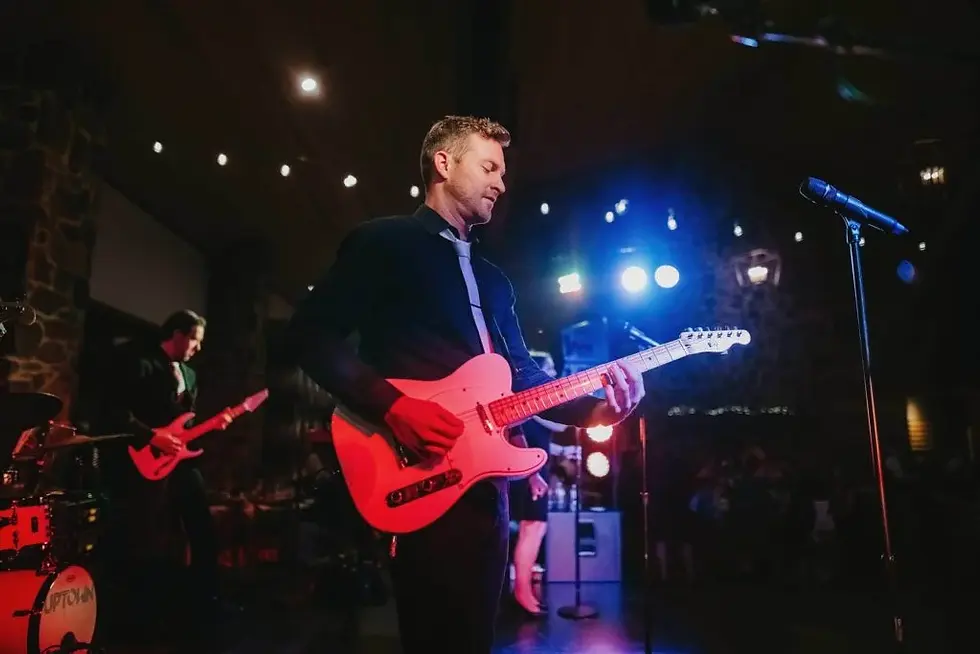
The mechanism is simple but specific. A professional live band, backed by HD lyric screens and an emcee who reads the room, invites willing attendees to the mic one at a time. The band follows the singer, not a backing track, so every performance sounds full and live regardless of vocal skill. That production layer matters. A karaoke machine with a laptop and pre-recorded tracks produces a thin, tinny sound that undercuts the moment. A live band, in contrast, fills the room.
For example, at a 2026 sales division conference the Texas Live Band Karaoke team worked in Austin, the VP of Finance, someone who'd spent the entire day presenting quarterly numbers, was the first to grab the mic. That single moment reset the room's social permission structure: if the VP will sing, anyone will. As a result, the rest of the night ran itself. This is the practitioner insight most vendors miss: live band karaoke isn't really about singing. Live band karaoke is about giving a room permission to stop performing professionalism for three hours.

Is Live Band Karaoke Worth It for Conferences and Conventions?
Live band karaoke is worth the investment for conferences and conventions when the organizer needs measurable engagement during networking hours, not just background noise. The return shows up in attendee retention through the evening, post-event survey sentiment, and the social content attendees generate on their own without being asked.
Consider the comparison against standard alternatives. A DJ costs less upfront in most cases but produces a passive audience that self-selects into small talk clusters. A cover band performs at the crowd rather than with it, which is enjoyable but doesn't create the same participatory moment. Trivia nights work well for groups of 30 to 50 but stall at conference scale; managing buzzer logistics and scoring for 300-plus attendees turns a fun activity into a production headache.
Live band karaoke scales differently. Whether the evening program serves 150 attendees in a hotel ballroom or 800 at a convention center general session afterparty, the format adjusts without losing its core mechanic: someone sings, the room watches, the room gets louder. According to Singa's 2018 analysis of European venues, karaoke nights produced a 31% increase in customer numbers and a 35% increase in average spend, a pattern that translates directly to conference bar and F&B revenue when karaoke anchors the evening program.
What Does a Production-Ready Live Band Karaoke Show Actually Include?
A production-ready live band karaoke show includes a rehearsed live band, professional emcee, HD lyric screens, premium sound and lighting, and a curated song catalog, all delivered by a single vendor rather than assembled piecemeal by the organizer. This bundled approach matters enormously at convention scale, where AV coordination failures are the single most common cause of evening program disasters.
Texas Live Band Karaoke maintains a consistent, rehearsed core lineup rather than rotating pickup musicians, which means the performance quality doesn't fluctuate based on who happened to be available that weekend. For a conference producer who's been burned by an inconsistent vendor before, that consistency is the single biggest risk-reduction factor in the entire evening budget.
Specifically, the show includes:
A full live band with rehearsed arrangements across a 50 to 75 song catalog spanning multiple genres and decades, wide enough to cover a diverse professional audience without decision fatigue.
HD lyric screens positioned for visibility across a large ballroom or general session space, so singers aren't squinting at a laptop.
An experienced emcee who manages pacing, reads crowd energy, and keeps momentum between singers, a role that separates professional live band karaoke from open-mic karaoke nights.
Premium sound and lighting production scaled to the venue, whether that's a 200-person breakout room or an 800-plus general session hall.
A seamless transition into a high-energy dance band set once the karaoke portion wraps, which eliminates the awkward dead zone that happens when entertainment ends but the bar stays open for another hour.
That last point deserves emphasis because it's the detail most competing formats miss entirely. When a DJ set or trivia night ends, the room usually empties within fifteen minutes. When live band karaoke transitions directly into a dance band set, in contrast, the energy compounds instead of dropping. Attendees who spent an hour cheering their colleagues on now have a reason to stay through last call.
How Do You Evaluate a Live Entertainment Vendor for a Large-Scale Conference?
Evaluating a live entertainment vendor for a large-scale conference means checking insurance coverage, production capacity, and audience-size track record before considering song lists or pricing. Convention centers and hotel venues in Austin, Houston, Dallas, and San Antonio all have vendor certificate of insurance requirements, and failing to confirm this requirement early is the most common reason evening programming gets delayed during final venue walkthroughs.
Start with these four questions, in order:
Is the vendor fully insured, and can they provide a certificate of insurance that meets your venue's specific requirements? Convention centers and university venues especially will not budge on this. Confirm insurance before you build the vendor into your budget, not after.
Does the vendor maintain a consistent core lineup, or do they book rotating freelance musicians per event? Rotating lineups introduce variability you can't control. A consistent core lineup means the show you saw in a demo video is the show you'll get.
What's their experience with your specific audience size? A vendor comfortable with 50-person private parties may not have the production infrastructure for a 500-person general session evening. Ask directly.
What happens after the main entertainment block ends? If the answer is "the show ends and the DJ takes over" or "nothing," you're likely facing a dead zone. Vendors who build in a natural transition, like a dance band set following karaoke, solve this proactively.
If you're planning corporate programming beyond the conference circuit, our guide to corporate entertainment ideas in Austin covers additional vendor evaluation criteria relevant to sales kickoffs and holiday events, which share many of the same logistics considerations as conference programming.
Where Does Live Band Karaoke Fit in Your Conference Schedule?
Live band karaoke fits best during cocktail hour transitions or as a dedicated late-night program block, not immediately following formal dinner speeches or keynote addresses. Event professionals recommend this placement because momentum built during a high-energy activity dies fast if the momentum is interrupted by a return to seated, formal programming.
For a typical multi-day conference, the strongest placement is the evening of day one or day two, positioned after dinner service concludes but before attendees drift toward hotel rooms. Specifically, a 90-minute karaoke block followed by a 60 to 90-minute dance band set gives the room a full arc: warm-up, peak participation, sustained momentum, natural wind-down.
In contrast, scheduling karaoke as a mid-afternoon "energizer" between breakout sessions rarely works. Attendees are still in work mode, badges on, laptops nearby, and the psychological permission to be loud and silly hasn't kicked in yet. Evening hours, once formal programming has ended, are when that permission structure shifts. As a result, timing is as important as vendor selection when you're designing the full evening program.
Data and Evidence: How the Karaoke and Live Entertainment Market Looks in 2026
The karaoke and live entertainment market has grown steadily as corporate and convention organizers increasingly treat interactive formats as a programming necessity rather than a nice-to-have. According to Market Research Future, the North America karaoke market is projected to grow from USD 270.59 million in 2026 to USD 374.39 million by 2035, reflecting sustained regional demand that includes corporate and conference bookings alongside consumer venues.
Globally, Stellar Market Research pegs the karaoke market at USD 5.92 billion in 2026, expected to reach nearly USD 7.04 billion by 2032. Separately, Dataintelo reports the global karaoke bars market reached USD 6.2 billion in 2026, projected to hit USD 11.5 billion by 2033, a compound annual growth rate of roughly 6.8%. These figures come from different market segments (karaoke products versus karaoke venues), but both figures point the same direction: sustained, not fading, demand.
Entertainment Format | Audience Role | Best Fit For | Key Limitation |
Live Band Karaoke | Active performer | 150 to 800-plus attendees, evening networking, brand activations | Requires stage/AV space and sound check window |
Standard DJ Set | Passive listener | Small mixers, background ambiance | Rarely generates active participation |
Cover Band | Passive listener | Formal receptions, dinner background music | Performs at the crowd, not with it |
Trivia Night | Active but low-energy | Groups of 30 to 50 | Logistics stall at conference scale |
Karaoke App/Machine | Active performer, thinner production | Small private gatherings | Weak sound quality, no live backing band |
Notably, corporate and private events are called out specifically in industry market analysis as a growing application segment for interactive entertainment, with businesses increasingly recognizing formats like karaoke as effective tools for engagement, not just novelty entertainment. This shift is consistent with what the Texas Live Band Karaoke team sees booking conference and convention clients across Texas: the request has shifted from "can you provide background music" to "can you make our attendees actually talk to each other."
What Should You Know Before Booking for a University or Convention Center Venue?
Booking live band karaoke for a university conference or convention center requires confirming venue-specific sound restrictions, load-in logistics, and insurance documentation well before your event date. Convention centers in particular often have union labor requirements for stage and AV setup that a production-ready vendor will already understand.
University programming adds an additional layer: campus risk management offices typically require proof of insurance and may restrict amplified sound hours depending on proximity to residence halls. Texas Live Band Karaoke has performed for university programs across the state and understands these institutional requirements going in, rather than discovering the requirements during a rushed load-in the morning of the event.
For downtown Austin convention venues specifically, loading dock access and elevator size can limit how much equipment a vendor can bring in during a tight changeover window. This logistics detail is worth asking about directly rather than assuming. A vendor experienced with convention center logistics will ask you these questions before you even think to ask them.
What Mistakes Should You Avoid When Planning Conference Entertainment?
The most common mistake conference organizers make is booking entertainment based on price alone without confirming production capacity for their actual attendee count. A vendor quote that looks affordable for 500 attendees may reflect a setup built for 100, which produces thin sound and a flat evening.
Here's a practical checklist to avoid the recurring failure points seen across conference programming:
Don't schedule entertainment immediately after formal keynote speeches. Build a buffer, even just a 20-minute break, so attendees can mentally shift out of session mode.
Don't assume "networking time" is self-sustaining. Structure at least one activity that gives attendees a shared, active experience rather than open floor space and a cash bar.
Don't skip the insurance conversation until the week of the event. Confirm certificate of insurance requirements with your venue at contract signing, not during final logistics calls.
Don't book a vendor who can't tell you what happens after the main set ends. A dead zone at 9:30 PM undoes three hours of built momentum.
Don't underestimate song catalog breadth. A narrow catalog limits participation across a demographically diverse convention audience; the 50 to 75 song range gives enough variety without decision paralysis.
If your evening program also includes a sales-focused component, our piece on creative sales meeting entertainment ideas covers how to structure energizing activities around a competitive, driven audience, a dynamic that overlaps significantly with convention sales tracks and regional sales kickoffs.
Frequently Asked Questions
How far in advance should conference organizers book live band karaoke?
Conference organizers should lock in live band karaoke entertainment 3 to 6 months ahead of the event, especially for peak booking seasons in Texas markets like Austin, Houston, Dallas, and San Antonio. Convention centers and hotel ballrooms often have limited entertainment slots during fall and spring conference seasons, so booking early protects your preferred date and gives the vendor time to coordinate load-in logistics with your venue. As a result, organizers who wait until 4 to 6 weeks out often find their preferred date already held by another group, forcing a scramble for a secondary vendor or a less favorable evening slot.
Can live band karaoke work for a conference of 500 or more people?
Yes, live band karaoke scales to conferences of 500 or more attendees when the vendor has the appropriate sound, lighting, and stage production to match the room size. A production-ready act designed for large venues, rather than a small-bar karaoke setup, uses scaled sound reinforcement and multiple lyric screen positions so attendees throughout a large ballroom or general session hall can see and participate equally. Texas Live Band Karaoke builds its production specifically for this range, from 150-person hotel ballrooms up to 800-plus attendee convention center halls, without losing the core mechanic of the format: someone sings, the room watches, the room gets louder.
What is the difference between live band karaoke and standard app-based or machine karaoke?
Live band karaoke features a real, rehearsed band performing behind each singer, producing full, live instrumentation rather than a pre-recorded backing track played through a laptop or karaoke machine. The difference is audible immediately: a live band fills the room with dynamic, responsive sound, while app-based or machine karaoke tends to sound thin and flat, especially in a large venue.
What happens after the live karaoke portion of the show ends?
After the karaoke portion concludes, Texas Live Band Karaoke transitions directly into a high-energy dance band set, keeping the momentum built during karaoke instead of letting the room go quiet. This built-in transition solves the common problem where entertainment ends abruptly but the venue and bar service continue, leaving attendees with no reason to stay engaged. For a typical evening program, that means a 90-minute karaoke block followed by 60 to 90 minutes of dance band performance, so the room's energy compounds rather than dropping at the point where a DJ set or trivia night would normally end and attendees would start heading for the exits.
Is live band karaoke appropriate for a university conference or campus program with institutional requirements?
Yes, live band karaoke works well for university conferences and campus programs, provided the vendor can meet institutional insurance and sound-level requirements. Texas Live Band Karaoke has experience performing at university programs across Texas and understands common campus risk management documentation and amplified sound restrictions before arriving on-site.
How do you justify the cost of live band karaoke entertainment to a finance or budget approval team?
Justify the cost by framing live band karaoke as a measurable engagement investment rather than a generic entertainment line item, since the format directly addresses attendee retention through evening hours and generates organic social sharing. Industry data from Singa's venue analysis found karaoke nights increased average customer spend by up to 35%, a pattern that applies to conference bar and F&B revenue when karaoke anchors the evening program instead of a passive DJ set.
Does Texas Live Band Karaoke travel outside Austin for conferences in other Texas cities?
Yes, Texas Live Band Karaoke regularly performs at conferences and conventions throughout Houston, San Antonio, and Dallas in addition to its home base in Austin. The company maintains a consistent, rehearsed core lineup across all these markets, so the production quality doesn't vary based on location.
What song selection process works best for a diverse conference audience?
A functional live band karaoke song catalog for a conference audience typically runs 50 to 75 tracks spanning multiple genres and decades, wide enough to appeal to a mixed-age, mixed-background professional crowd without overwhelming attendees with excessive choice. Popular selections often include recognizable crowd-pleasers, from classic rock to country hits like Garth Brooks' "Friends In Low Places," which give hesitant first-time singers an easy, familiar entry point. As a result, an emcee can guide a nervous first-timer toward a well-known song within the catalog, lowering the barrier to that first performance and setting up the rest of the room to follow.
Conclusion: Fixing the Evening Program Problem for Good
The core issue with most conference evening entertainment isn't budget or venue, it's format. Passive entertainment produces a passive room, and no amount of catering or lighting upgrades fixes that outcome once the energy has already dipped. Live band karaoke for conference and convention organizers works precisely because the format hands attendees the mic instead of asking them to watch, and the format does so with the production quality and scalability that large-scale events require.
As of 2026, with the karaoke and interactive entertainment market continuing steady growth according to Stellar Market Research and Dataintelo, more conference organizers across Texas are moving away from passive DJ sets toward formats that measurably keep attendees in the room. Whether you're producing a 150-person regional summit or an 800-plus national convention, the questions to ask remain the same: insurance, production capacity, consistency of the performing lineup, and what happens once the main entertainment block ends.

If your evening program needs a reset, Texas Live Band Karaoke's production-ready format has been built specifically for the logistics conference organizers deal with: insurance documentation, scalable sound for large ballrooms, and a rehearsed lineup that performs the same way every time. Get started with Texas Live Band Karaoke and let's talk about what your next conference evening could look like.
Written by Greg Williams, Owner & Band Leader at Texas Live Band Karaoke
Content powered by inkSTR.co


Comments